


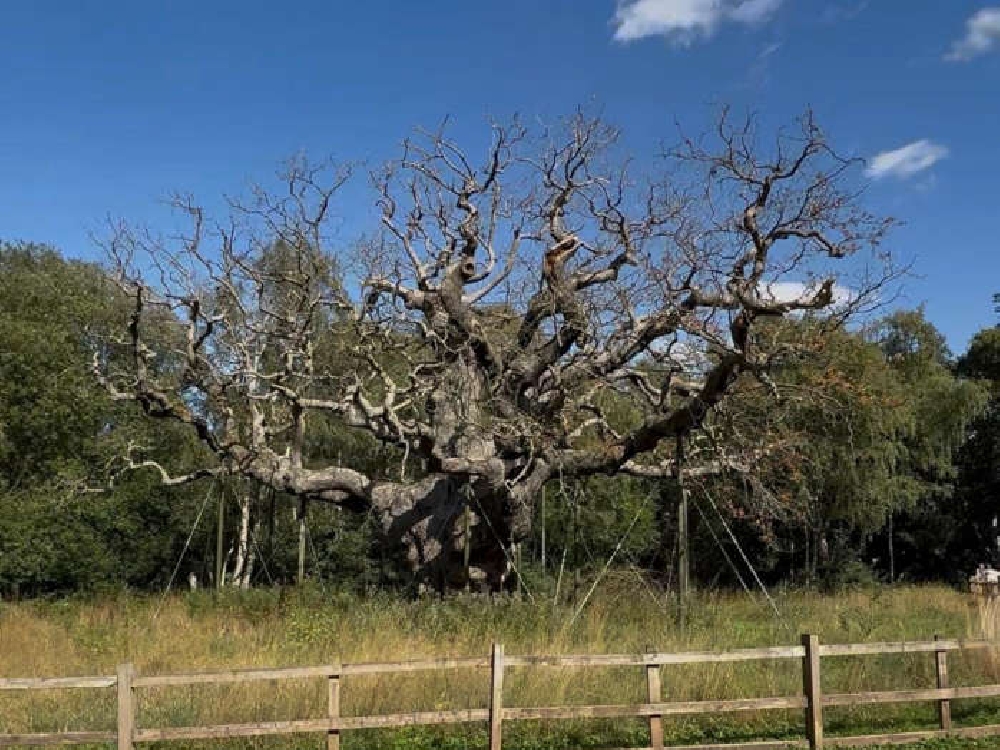
Famous landmark has died but is about to enter a new phase of life
The Major Oak is believed to have died after more than 1,000 years, but it will not be removed from Sherwood Forest.
The famous oak, believed to be up to 1,200 years old, will remain standing as a natural monument, entering a new stage of life where it will continue to support wildlife for years to come.
As the tree naturally changes over time, its dead and decaying wood will become a habitat for insects, fungi, birds and mammals. Ancient oaks are among the most valuable habitats in the UK, supporting thousands of species throughout their lifetime.
Ed Pyne, Senior Conservation Adviser at the Woodland Trust, said: ‘As soon as a tree dies, it transitions into a completely new life phase. A standing deadwood tree supports a different community of species.’
The Major Oak will gradually change over the coming years, with branches and bark naturally falling away. Mr Pyne said it will eventually become part of the landscape in a different form.
He said: ‘Gradually, what will happen is the ends of the branches will fall off, the bark will fall off it, and it’ll get bleached by the sun. It will look like an enormous piece of amazing sculpture.’
The tree’s decline has been linked to a combination of factors, including its age, historic human activity around the tree, soil compaction and recent climate pressures.
After years of monitoring, experts found the Major Oak’s root system had been affected by heavily compacted soil, making it harder for the tree to access the oxygen and nutrients it needed.
The lessons learned from caring for the Major Oak will help shape how other ancient and veteran trees are protected in the future.
Simon Parfey, Managing Director of SoilBioLab, said: ‘The Major Oak’s true legacy is no longer just in folklore, but in the future of conservation.’
The tree’s legacy will also continue through new generations. Acorns and cuttings from the Major Oak have already been grown into saplings, with plans being developed to protect its genetic future.
After more than 1,000 years at the heart of Sherwood Forest, the Major Oak may have entered a different stage of life, but it will remain part of the forest for generations to come.


Comments
Add a comment